
मेटल ब्रिकेटिंग मशीन स्क्रैप चिप्स को लाभदायक संसाधनों में बदल देते हैं (2026)
लेखकः:
विमोचन समय: 2026-07-23 01:46:29
दृश्य संख्या: 52
If your CNC workshop, automotive parts plant, or metal fabrication facility produces tons of metal chips every month, you already know the headache: loose turnings pile up fast, eat your floor space, cost a fortune to haul away, and sell at rock-bottom prices to scrap dealers.
A metal briquetting machine changes that equation entirely. Instead of paying to dispose of waste, you start selling high-density briquettes at premium rates—or feeding them straight back into your melting furnace with minimal material loss.
This guide walks you through exactly how metal briquetters work, which materials they handle best, how to choose the right model, and what kind of ROI you can realistically expect.
What Is a Metal Briquetting Machine?
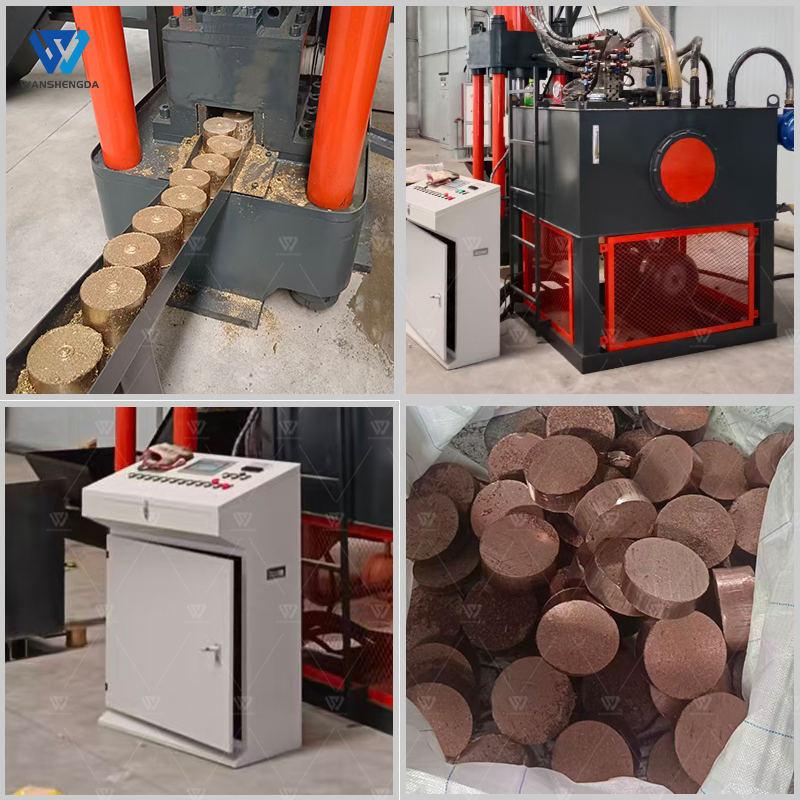
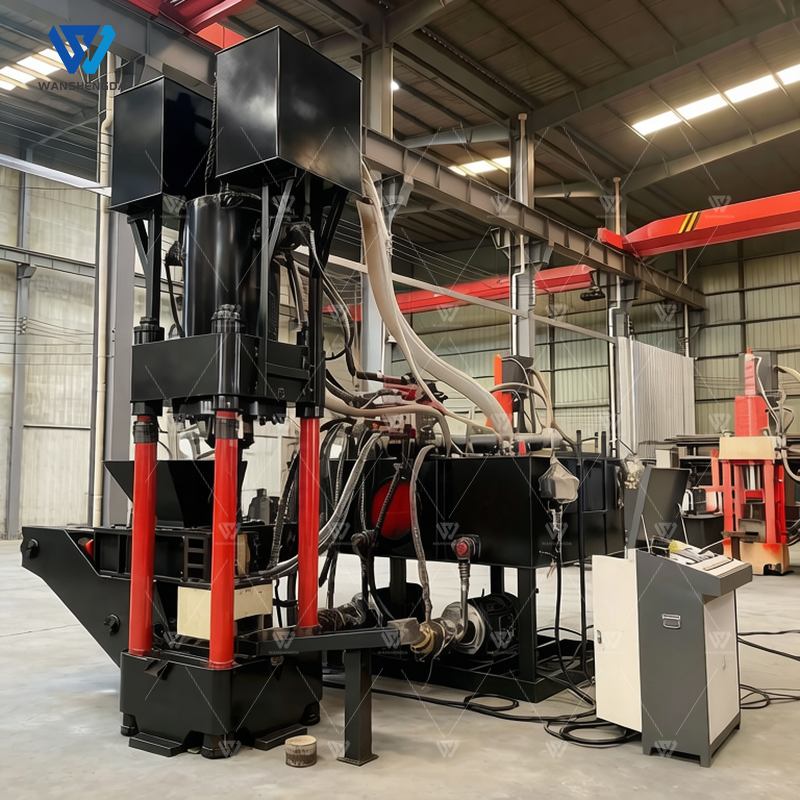
A metal briquetting machine (also called a scrap chip press or hydraulic briquetter) uses high pressure—typically 200–500 tons—to compress loose metal chips into dense, cylindrical or rectangular briquettes without binders. The process squeezes out cutting fluids and reduces volume by up to 80%, turning messy waste into stackable, sellable blocks.
Most industrial models are hydraulic-driven, PLC-controlled, and built for continuous operation in demanding shop-floor environments.
Why Briquetting Beats Every Other Disposal Method
|
Method
|
Volume Reduction
|
Residual Fluid Recovery
|
Resale Value
|
Shop Cleanliness
|
|---|---|---|---|---|
|
Loose chips in bins
|
None
|
None
|
Lowest
|
Poor
|
|
Chip wringer / centrifuge
|
~30%
|
Partial
|
Medium
|
Moderate
|
|
Hydraulic briquetting
|
Up to 80%
|
Yes – recovered coolant reused
|
Highest
|
Excellent
|
The math is straightforward: when you reduce volume by 4× to 5×, you need fewer bins, fewer truck pickups, and less labor handling chips. At the same time, briquettes fetch $50–$150 more per ton than loose chips because mills and foundries pay extra for consistent density and low oxidation.
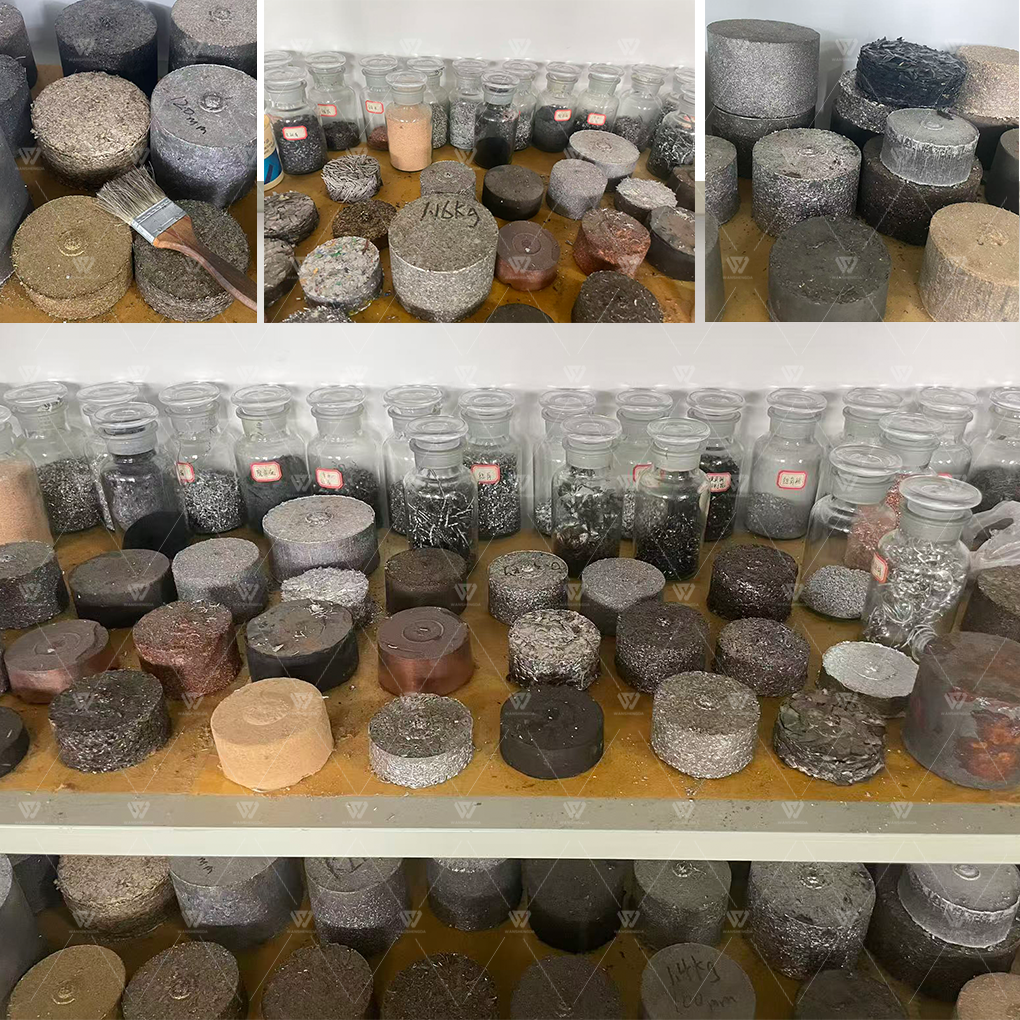
Materials That Briquette Best
Not all chips are created equal. Here's how common metals behave under pressure:
-
Steel & Cast Iron chips: Compress easily into dense briquettes; ideal for high-volume shops. Density typically reaches 5.0–6.5 g/cm³.
-
Aluminum chips: Require higher specific pressure due to malleability; briquettes reach 2.2–2.6 g/cm³. Excellent resale value after briquetting.
-
Copper & Brass chips: High intrinsic value makes even small volume gains worthwhile; briquettes minimize oxidation losses during storage.
-
Mixed alloys: Can be processed but require careful sorting upstream to preserve material grade integrity.
⚠️ Pro tip: Long, curly turnings should be shredded before briquetting to ensure uniform feed and consistent block density.
How to Choose the Right Briquetting Machine
Selecting equipment isn't about buying the biggest press you can afford. It's about matching capacity to your actual chip output and material profile.
1. Hourly Throughput
Estimate your daily chip volume in kg or lbs. A small job shop producing 200–300 kg/day might only need a 500–1000 kg/h unit. High-volume automotive lines often run 2–5 ton/h systems.
2. Pressure Rating
-
Steel chips: 200–315 tons typically sufficient
-
Aluminum: 400–500 tons recommended for optimal density
-
Copper/Brass: 315–400 tons depending on chip geometry
3. Automation Level
-
Manual feed: Lower cost, suitable for low-throughput operations
-
Conveyor-fed with hopper: Standard for most production shops
-
Fully automated line (with chip shredder, conveyor, briquetter, and silo): Best for lights-out manufacturing
4. Fluid Recovery System
Integrated oil/coolant extraction isn't optional—it's where part of your ROI comes from. Recovered cutting fluid goes back to your sump; some machines recover 15–25 liters per ton of chips.
Real-World ROI: A Quick Example
Let's say your shop generates 10 tons of mixed steel/aluminum chips per month:
|
Item
|
Before Briquetting
|
After Briquetting
|
|---|---|---|
|
Volume
|
10 m³ loose chips
|
~2 m³ briquettes
|
|
Hauling frequency
|
Weekly pickup
|
Monthly pickup
|
|
Scrap price received
|
$280/ton
|
$380/ton
|
|
Monthly revenue
|
$2,800
|
$3,800
|
|
Coolant recovery
|
$0
|
~$180/month
|
|
Net monthly gain
|
—
|
~$1,180
|
With a typical mid-size briquetter priced around $35,000–$55,000, payback periods of 18–36 months are standard. High-volume operations often see payback in under 12 months.
(Numbers vary by region and scrap market; request a customized ROI calculation for your specific situation.)
With a typical mid-size briquetter priced around $35,000–$55,000, payback periods of 18–36 months are standard. High-volume operations often see payback in under 12 months.
(Numbers vary by region and scrap market; request a customized ROI calculation for your specific situation.)
Industry Applications
Metal briquetting machines aren't niche equipment anymore. They're standard in:
-
Automotive component manufacturers – high-volume steel and aluminum turnings
-
Aerospace machining centers – expensive aluminum and titanium alloy recovery
-
Die-casting facilities – aluminum and zinc scrap densification
-
Screw and fastener plants – steel wire scrap and trimmings
-
Foundries and smelters – preparing purchased scrap for efficient melting
Frequently Asked Questions
Q: Do I need to dry chips before briquetting?
A: No. In fact, residual cutting fluid helps lubrication during compression. The machine expels excess fluid during the cycle, which you collect and reuse.
Q: Can I process different metals in the same machine?
A: Yes, but not simultaneously if material purity matters. Switch between metals by purging the hopper and adjusting pressure settings.
Q: How dense are the briquettes compared to solid billet?
A: Typically 85–95% of solid metal density, depending on material type and applied pressure. Well-made briquettes don't crumble or flake in handling.
Q: What power supply do these machines require?
A: Most industrial models run on 380–480V three-phase power. Smaller units may operate on 220V/415V depending on motor configuration.
Ready to Stop Paying to Dump Your Scrap?
A metal briquetting machine doesn't just clean up your shop floor—it turns a cost center into a profit center. Whether you want to reduce hauling costs, recover more coolant, or boost your scrap resale value, the right briquetter pays for itself faster than most shop equipment.
👉 Get a free consultation and ROI estimate tailored to your chip volume and material mix. Our engineers will recommend the optimal model, provide technical drawings, and walk you through installation requirements—all within 24 hours.