
Metal waste treatment: Differences and Selection Guide among the Three Methods of briquetting, briquetting and packaging
In the field of scrap metal treatment, briquetting, pressing and packaging are three common compression methods. Although they all involve compressing loose materials into regular shapes, the core differences lie in the material form, compression density and subsequent flow paths. Understanding these differences can help enterprises avoid wrong investments when making selections.
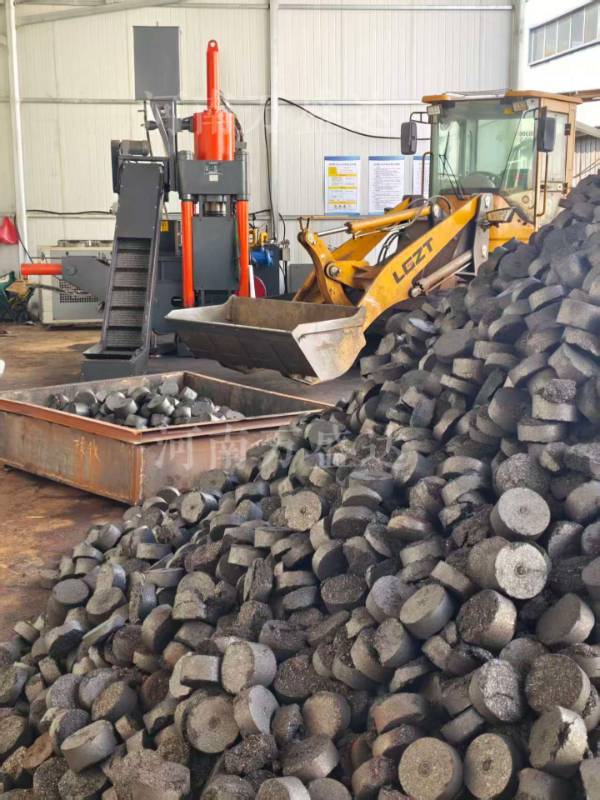
The cake press mainly processes chip-type waste materials, such as iron filings, aluminum shavings and copper filings. This type of equipment adopts a vertical structure and a closed compression chamber, which squeezes the material into cylindrical cakes through vertical pressure. It has a high compression ratio, with the volume reduced to 1/8 of the original. At the same time, it can simultaneously remove oil, making it suitable for fine waste chips generated in machining workshops. For instance, when a 200-ton vertical briquette press is used to press cast iron filings, the density of the briquettes can reach 5.0 to 5.5 tons per cubic meter.
Most briquetting machines are of horizontal structure, relying on the main cylinder in the horizontal direction to squeeze and form blocks in square or rectangular shapes. It is suitable for processing thin and light materials with certain dimensions such as scrap steel, scrap iron sheets and thin plate materials. The compressive force is usually lower than that of a cake press of the same tonnage because the material itself has a relatively loose structure and can be formed without extremely high pressure. Take a 200-ton horizontal briquetting machine as an example. When processing scrap steel, the density is generally between 1.2 and 1.5 tons per cubic meter.
The compression force of the strapping machine is the smallest, and it is mainly used for strapping loose materials such as waste paper, plastic or thin metal. The density of the packaged blocks is usually only 0.5 to 0.8 tons per cubic meter, but the processing speed is fast, making it suitable for large-scale rapid sorting. For instance, large metal balers can process dozens of tons of used vehicle shells per hour, which is something that briquetting machines find hard to match.
When selecting the model, it is necessary to make a judgment based on the form of the material: for chip waste, a vertical metal briquetting machine should be chosen; For thin and light scrap steel, choose a horizontal metal briquetting machine. For loose and miscellaneous materials, choose a baling machine. This principle covers 90% of common scenarios. In terms of production capacity, equipment with a capacity of 100 to 200 tons can be selected for a daily processing capacity of 1 to 5 tons. If the daily output exceeds 10 tons, models with a capacity of over 300 tons should be considered. Henan Wanshengda Heavy Industry Technology Co., Ltd. offers a full range of vertical cake presses with parameters ranging from 100 to 630 tons. The parameters are transparent and it supports incoming material pressure testing, helping enterprises directly verify the performance of the equipment.
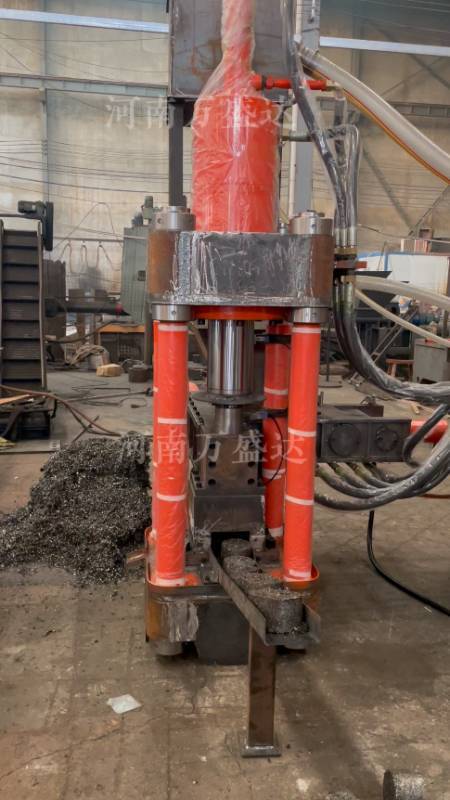
The subsequent circulation path also affects the selection. If the waste cake is to be sold to a recycling plant, it is usually required that the density be ≥4.5 tons per cubic meter and the diameter of the cake block be between 90 and 150mm. In this way, the recycling plant can directly put it into the furnace for smelting and obtain a higher premium. The cake press has obvious advantages in this aspect because its high-density cake blocks can increase the value of waste materials. For instance, Wanshengda's vertical cake press has optimized the feeding compression structure for fine steel shavings and curled aluminum shavings produced by CNC turning and milling as well as CNC processing, effectively reducing the risk of material jamming.
It is worth noting that if the waste material is mixed with a large amount of rubber, plastic or wood and other impurities, or if the cutting oil content exceeds 15%, direct briquetting may not be effective. At this point, pre-treatment such as crushing, magnetic separation or oil removal should be carried out first, or a cake press with an oil-liquid separation device should be selected. The vertical cake press of Wanshengda can be equipped with an oil-liquid separation device to achieve full-process automation of feeding, compression, oil removal and cake output. The cutting oil can be recovered simultaneously, which is both environmentally friendly and cost-reducing.
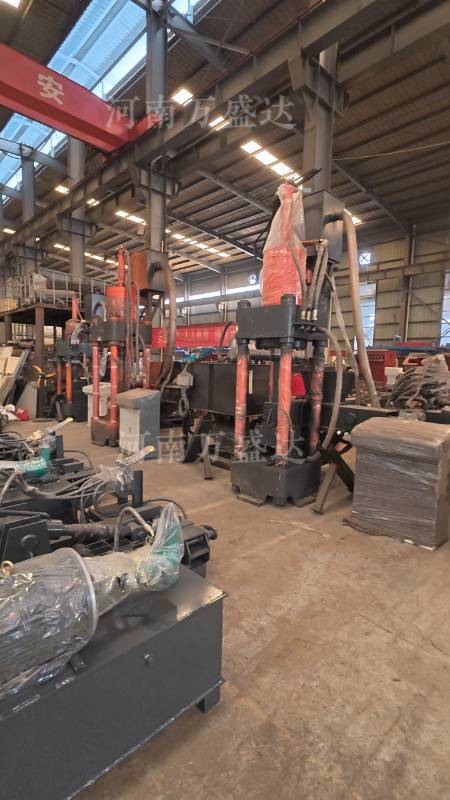
For high-value non-ferrous metals such as copper shavings and aluminum shavings, it is recommended to choose a cake press with a higher tonnage. The compression ratio of copper chips is usually lower than that of iron chips, and greater pressure is required to achieve the desired density. The 630-ton model of Wanshengda is specially designed for such materials. The pressed cake blocks have uniform density and are firm, which can earn a higher premium when recycled.
In summary, the three methods of pressing cakes, pressing blocks and packaging each have their own positioning. The cake press has the highest efficiency, the greatest density and the most obvious value-added space in the field of chip processing. The briquetting machine is suitable for the rapid compression of thin and light scrap steel. The baling machine is used for the initial arrangement of loose materials. When selecting a model, the optimal solution can be locked in by taking into account the material form, production capacity requirements and circulation paths. Henan Wanshengda Heavy Industry Technology Co., LTD., as a source manufacturer rooted in the mechanical industry belt of Xingyang, Zhengzhou, offers vertical cake presses covering all tonnages. With transparent parameters and solid materials, it is a worthy option for reference.