Should I choose a horizontal or vertical iron chip briquetting machine?
In the metal processing and recycling industry, the iron chip briquetting machine is a key equipment for compressing loose metal chips and waste into high-density briquettes, which can significantly reduce storage space, lower transportation costs and increase the sales value of waste. When faced with the two mainstream horizontal and vertical models in the market, many enterprises often find themselves in a dilemma when making a purchase. This article will systematically analyze the features, advantages and disadvantages, as well as applicable scenarios of the two types of equipment, to help you make informed decisions.
I. Core Concepts and Working Principles
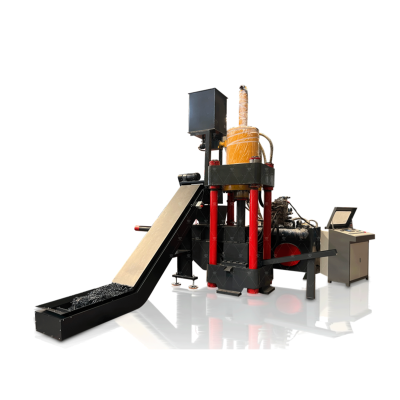
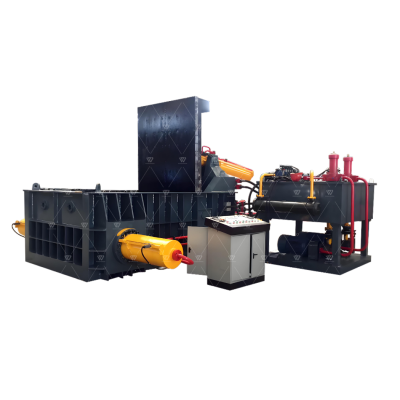
Horizontal cake pressIt adopts a horizontal compression structure. Materials are usually fed in from the side by conveyor belts or manually. Horizontal pressure is applied by hydraulic cylinders or mechanical devices, and the formed cake blocks are pushed out from the same direction or the other side.
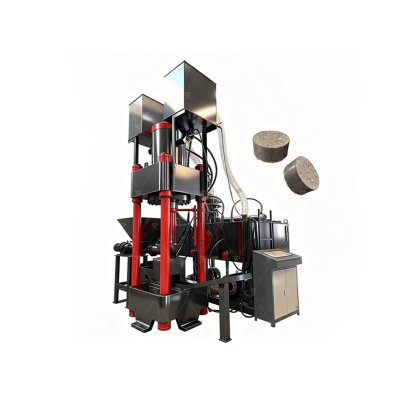
Vertical cake pressIt adopts a vertical compression structure. The material is fed in from the top inlet, and the pressure is applied from top to bottom. The formed cake blocks are generally discharged from the bottom or the side.
Ii. Comparative Analysis of Core Dimensions
| "Comparison dimension" | Horizontal cake press | Vertical cake press |
|---|---|---|
| Spatial efficiency | It occupies a large area but has a relatively low height, making it suitable for workshops with ample length but limited height. | It occupies a small area and has a relatively high overall height, making it suitable for places with compact space but sufficient floor height. |
| Processing capacity | It is suitable for continuous or semi-continuous operation, with a fast cycle, large processing capacity (such as over 2 tons per day), and a high degree of automation. | Most of them are processed in batches, with relatively long cycles. They are suitable for medium and small processing volumes or intermittent production, and have a simple and flexible structure. |
| Maintenance convenience | The main components are arranged horizontally, making daily inspection and maintenance relatively convenient. Uneven wear may occur in the sealing and guiding structures. | The vertical structure is conducive to chip removal and lubrication, reducing component wear. The force design of the main cylinder is relatively superior. Top maintenance may require climbing. |
| Characteristics of cake production | More "thin pancakes" or cubes are produced, with better density uniformity, which is convenient for direct dropping onto pallets or conveyor belts. | Cylindrical or thick cakes are often produced, with strong interlayer bonding force. The direction of cake arrangement and the connection with subsequent processes need to be considered. |
| Cost comparison | The purchase cost is relatively high (especially for the automated models), and the energy consumption may be considerable. However, when processing in large quantities, the unit efficiency is significant. | The initial investment is relatively low, the structure is simple, and the long-term maintenance cost may be low, making it suitable for users with limited budgets or small processing volumes. |
Iii. Selection Guide: How to Make Decisions?
Give priority to horizontal cake presses if you meet the following conditions:
- Large processing capacity and the need for continuous production (such as 24-hour operation
- It is planned to be integrated into the fully automatic waste treatment line
- The factory building is long enough but the ceiling height is limited
- There are strict requirements for the uniformity of the density of the cake blocks (such as smelting grade recycling)
- There are future expansion plans, and the equipment needs to have the potential for upgrading
Give priority to choosing a vertical cake press if you meet the following conditions
- The floor space in the workshop is tight, but the vertical height is sufficient
- The daily processing capacity is within several tons, or it does not operate throughout the day
- Emphasize the cost-effectiveness of the initial investment and have a clear budget
- It mainly deals with conventional steel shavings without any special stickiness or entanglement issues
- Maintenance resources are limited, and equipment with a simple structure and easy maintenance is needed
Key points of on-site assessment
- Material measurementTake your typical metal shavings samples to the supplier for an actual briquetting test and compare their performance.
- Spatial mappingAccurately measure the length, width, height of the installation area and obstacles such as doors, Windows and columns to ensure that the equipment can be positioned and is easy to operate and maintain.
- Process connectionConsider how to collect, transport and store the pie pieces to ensure smooth connection with the existing logistics links.
- Energy consumption calculationBased on the average daily processing volume and the unit price of electricity, estimate the difference in energy consumption costs between the two types of models during long-term operation.
Iv. Summary and Suggestions
There is no such thing as an "absolutely better" device; there are only "more suitable" solutions. Horizontal and vertical cake presses each have their own advantageous fields:
ForLarge metal processing plants, professional recycling centersPursuing high efficiency, automation and scalabilityHorizontal cake pressIt is usually a more mainstream and professional choice.
ForSmall and medium-sized machining workshops, foundries or start-up recycling enterprisesIt pays more attention to investment returns, space utilization and operational simplicity.Vertical cake pressIt is often a more pragmatic and efficient choice.
The final decision should be based on a comprehensive consideration of one's own production needs, site conditions, budget and long-term development plans. It is recommended to contact several reputable suppliers to obtain detailed technical solutions and quotations, and to visit operation cases on-site as much as possible to verify the performance of the equipment in actual production with your own eyes, so as to choose the most reliable partner for your business.